
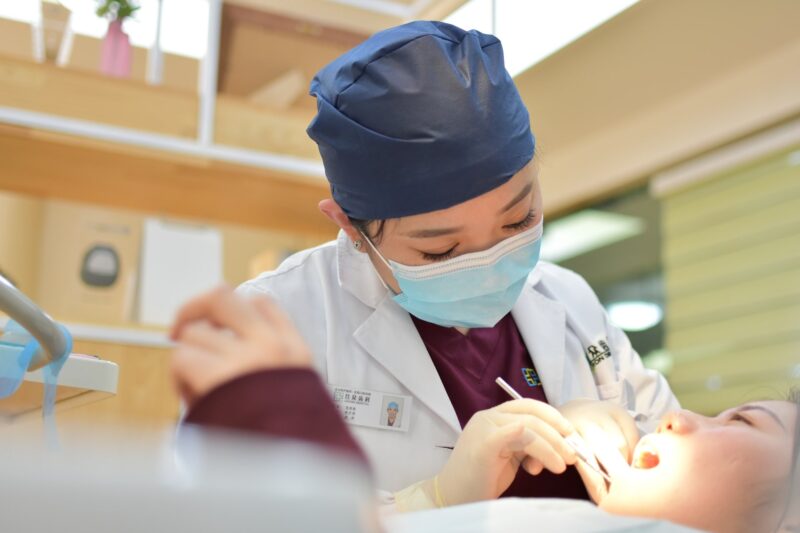
Technology is quickly transforming our healthcare landscape. The 21st century has gifted the medical industry some amazing inventions, and dentists are especially proactive about adopting new technology in their practices. One of the most significant findings in the dental industry is the use of ozone in dentistry.
A big problem for dentists is keeping water that flows from dental unit waterlines safe from biofilm that contaminates water flowing through these units. Dental unit waterlines are plastic tubing that carries water to a dentist’s high-speed handpiece, air/water syringe, and ultrasonic scaler. Patients ingest water from these tubes and dental staff are exposed to aerosols on a daily basis.
What is biofilm?
Biofilm is a thin, slimy film of bacteria that sticks to moist surfaces, such as those inside dental unit waterlines. Biofilm develops in dental unit waterlines because of the long, narrow tubing and periods of slow or stopped-flow rates used in dental clinics, and the potential for retraction of oral fluids by patients. As a result, common water bacteria can be found in alarmingly high numbers of untreated dental unit water systems.
Biofilm is not eliminated by flushing the water lines with tap water, a daily procedure recommended by the CDC to ensure clean water in dental offices. Some of these microorganisms found in untreated dental unit water cause diseases, including Legionella, Pseudomonas aeruginosa, and nontuberculous Mycobacterium.
Not only patients but dental health care personnel are also placed at risk of adverse health effects if water is not appropriately treated. Previously, dentists used a combination of chemicals and multi-step procedures to disinfect water lines. But in recent years, the industry has adopted ozone as a safer and more efficient disinfection method, not to mention more cost-effective.
How ozone kills bacteria in dental waterlines
Ozone (O3) is an active gas consisting of three atoms of oxygen. It is active because the gas will readily degrade back to its stable state, diatomic oxygen (O2) with the formation of free oxygen atoms or free radicals. The free oxygen atoms or radicals are highly reactive and they will oxidize almost anything it contacts (including viruses, bacteria, organic and inorganic compounds), making ozone an enormously powerful disinfectant and oxidizer.
Ozone is a very good alternative and additional support to standard disinfectants due to its acknowledged disinfection power. Ozone water can directly oxidize and decompose essential biomolecular components in bacteria. All vital functions of bacteria (incapable of developing any self-immunity) are stopped as a result of applying ozone for just a few seconds and can disinfect dental unit water lines in seconds.
Ozone kills bacteria in minutes
In a 2015 Egypt study by Iran J Parasitol, two dental unit waterlines were tested for presence of Acanthamoeba microbes — harmful bacteria that is prone to develop in these narrow plastic tubes. When testing untreated water lines, the research team discovered bacteria in 100 percent of dental unit waterlines, compared to just 72 percent of tap water samples. That means tap water is cleaner than untreated dental unit waterlines.
In the study, aqueous ozone was injected into the dental unit water bottles for five minutes in the first unit and for ten minutes in a second unit. The lines were then flushed with ozonated water for five minutes, after which water was immediately sampled via the high-speed handpiece into sterile containers. This was repeated daily every morning for seven days. Water samples were collected before and after treatment. All the samples were cultured on nutrient agar plates and incubated at 37 °C for 7 days to determine the presence of Acanthamoeba bacteria before and after exposure to ozone.
Researchers discovered that when Acanthamoeba bacteria was exposed to several concentrations of ozonated water, the cell viability of the bacteria decreased to 52 percent after exposure to ozonated water for just four minutes, while Acanthamoeba was killed (100 percent) after just five minutes of exposure. This is why dentists have adopted aqueous ozone systems in their practices.
Ozonated water – A dentist’s secret weapon
The results show just how effective ozonated water is for keeping these bacteria from infecting patients undergoing dental procedures, making it an invaluable tool for dentists in keeping patients and dental staff safe. At the same time, patients undergoing stressful dental procedures will have peace of mind knowing they won’t be exposed to contaminated water.
BES Group – A global leader in electrolytic ozone
Since 1988, BES Group has been a leading electrolytic ozone manufacturer dedicated to “chemical-free” sanitation solutions. BioSure Professional, under BES Group, provides professional solutions applying advanced ozone technologies in healthcare, food safety and hygiene, commercial laundry, air quality control, water treatment, and other industries.
Our sanitation solutions have helped numerous global corporations and organizations, spanning the hospitality to medical care industries. To see more details of our various solutions, please visit our official website: www.biosureozone.com
Copyright besgroups.com All Rights Reserved
Related Articles
Is Ozone Water Safe?
What is Ozone Water?
Chlorine Solution vs Ozonated Water: The Debate in Professional Sanitation

